Furniture Plus
Furniture Plus
Lower back pain from sitting isn't random — it comes from a very specific problem: when your spine loses its natural inward curve at the lower back, the muscles and discs there take on load they weren't built to carry for hours at a time. An ergonomic chair is designed specifically to prevent that, and understanding the mechanism makes it much easier to judge whether a chair will actually help before you buy it.
Here's what happens mechanically. When you sit in a flat-backed chair with no lumbar support, gravity slowly pulls your pelvis into a slouch, flattening the lower spine's natural curve. Over a few hours, that flattened position puts extra pressure on the discs between your lower vertebrae — which is exactly where most desk-related back pain originates. This isn't a slow, cumulative injury in the way repetitive strain works elsewhere in the body; it's closer to a direct mechanical consequence that starts within the first hour of poor support and simply gets worse the longer it continues.
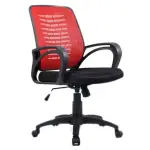
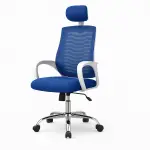
A proper Ergonomic Chair pushes back against that in a few specific ways:
- The lumbar support physically fills the gap at your lower back, keeping the natural curve in place instead of letting it flatten.
- Seat height adjustment keeps your hips level with or slightly above your knees, which reduces the forward pelvic tilt that causes slouching in the first place.
- A reclining backrest lets you shift the angle through the day, so no single posture gets held under load for hours straight, distributing strain rather than concentrating it in one position.
- Breathable mesh keeps you from shifting into awkward positions just to escape heat buildup against a solid backrest, which itself often leads to compensatory bad posture over a long day.
This is why people who switch from a basic chair to a proper ergonomic one often notice a difference within days, not months — it's not a gradual conditioning effect, it's simply removing the mechanical cause of the strain. That said, existing chronic pain or an underlying condition won't necessarily resolve from a chair change alone, and it's worth treating a new chair as a strong preventive and comfort measure rather than a guaranteed medical fix.
It's worth being honest about the limits too: an ergonomic chair helps enormously, but it isn't a substitute for getting up and moving. Even the best chair in the world still has you sitting still. Short breaks every hour or so, even just to stand and stretch, make a real difference alongside the right chair, and combining both tends to produce far better results than either alone.
People sometimes ask whether the effect is purely physical or partly psychological — does simply believing the chair is better make you feel better? The honest answer is that the mechanical explanation holds up on its own: X-ray and pressure-mapping studies on seated posture consistently show reduced disc pressure with proper lumbar support, independent of how the person feels about the chair itself. That doesn't mean comfort perception doesn't matter too, just that the underlying mechanism is real, not just a placebo effect.
In Bangladesh, ergonomic chairs with genuine lumbar support start around ৳6,000, going up to ৳18,000 for models with full adjustability. See our Best Chair for Back Pain guide for a full buying checklist.
🛒 Browse the full Ergonomic Chair collection or explore everything Furniture Plus offers from the homepage, with a 1-year warranty and fast delivery.